Why are signal transmission die castings so important in equipment performance?
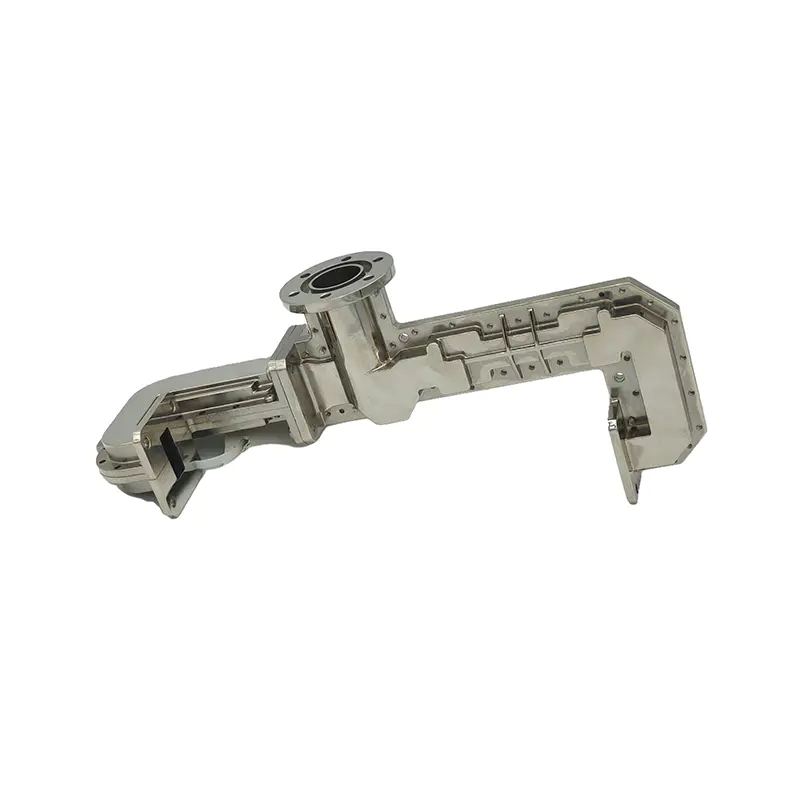
As an important shell of signal transmission equipment, signal transmission die castings not only bear the responsibility of protecting the internal electronic components of the equipment, but also need to ensure the accurate transmission of signals and the long-term stable operation of the equipment. In signal transmission equipment, the transmission quality of signals is closely related to the shell design and manufacturing process of the equipment. Factors such as the materials, structural design, and surface treatment used in signal transmission die castings will directly affect the performance of the equipment.
Mechanical strength and durability: Signal transmission equipment usually needs to operate in various environments, such as outdoors, under complex conditions such as high temperature, low temperature, or humidity. In order to ensure that the equipment can operate stably for a long time, signal transmission die castings must have sufficient mechanical strength and durability. Aluminum alloy materials have become the preferred material for this type of castings because of their light weight, corrosion resistance, and high strength. Through high-pressure casting technology, aluminum alloy castings can meet the structural strength requirements and can resist the impact of external environmental factors such as wind, rain, dust, and temperature changes on the equipment.
Thermal management design: During the signal transmission process, a large amount of heat will be generated inside the equipment. Especially for high-power signal transmitting and receiving equipment, if the heat is not dissipated in time, it will cause the equipment to overheat, affect the working performance of the equipment, and even cause equipment damage. Therefore, good heat dissipation design is essential for signal transmission die castings. Usually, by designing structures such as heat sinks, heat dissipation holes or channels, castings can effectively dissipate heat and ensure that the equipment operates within the normal temperature range. Aluminum alloy is an ideal choice for signal transmission die castings due to its excellent thermal conductivity.
Electromagnetic compatibility: Electromagnetic compatibility is another important factor in signal transmission equipment, especially the equipment has very high sensitivity to electromagnetic interference and electromagnetic leakage. signal transmission die castings must not only prevent interference from external electromagnetic waves, but also prevent internal signal leakage of the equipment. The aluminum alloy shell can protect the internal circuit from external electromagnetic interference through the electromagnetic shielding function, while preventing the internal signal from interfering with the external environment. Therefore, the electromagnetic shielding performance of the signal transmission casting is directly related to the stability of the equipment and the signal transmission quality.
Dimensional accuracy and installation convenience: The dimensional accuracy requirements of signal transmission die castings are very high, because any slight dimensional error may affect the installation of electronic components inside the equipment, thereby affecting the signal transmission and working performance of the equipment. Aluminum alloy signal transmission die castings need to strictly control dimensional accuracy during the manufacturing process to ensure that each component can be perfectly docked. In addition, the casting also needs to take into account the installation convenience of the equipment. Especially for mobile devices or portable signal transmission devices, lightweight design helps to improve their installation efficiency and flexibility of use.
How to improve the performance of signal transmission die castings through advanced casting processes?
In addition to the selection of materials, the casting process also plays a vital role in the quality and performance of signal transmission die castings. Ningbo Jinyao Machinery Co., Ltd.'s rich experience in the field of aluminum alloy precision casting enables it to produce signal transmission die castings that meet high standards. The company uses advanced technologies such as vacuum casting, needle extrusion and high-pressure point cooling to significantly improve the mechanical properties, electromagnetic compatibility, and heat dissipation capabilities of signal transmission die castings.
Vacuum casting technology: Vacuum casting technology can effectively avoid the generation of bubbles and impurities and reduce defects on the surface and inside of castings by creating a vacuum environment during the casting process. This technology ensures that signal transmission die castings have a smoother and finer surface, and improves the density and mechanical strength of castings. In signal transmission equipment with high precision requirements, vacuum casting can provide high-quality castings and avoid signal transmission problems caused by dimensional errors or structural defects.
Needle extrusion process: The needle extrusion process can create complex structures in the casting, such as heat dissipation holes and channels, to optimize the thermal management performance of the casting. When the signal transmission equipment is running at high load, the rapid discharge of heat is essential for the stability of the equipment. Through the needle extrusion process, castings with efficient heat dissipation can be designed to ensure that the equipment can maintain a suitable temperature range during operation and extend its service life.
High-pressure point cooling technology: High-pressure point cooling technology accelerates the cooling rate of the casting by spraying coolant at specific parts of the casting at high pressure during the casting process. The control of the cooling rate can effectively reduce the internal stress of the casting and prevent deformation and cracks during the cooling process. In addition, this technology can complete the cooling of the casting in a short time, improve production efficiency and reduce production costs. For signal transmission die castings, good cooling effect helps to maintain its accuracy and structural stability.
Surface treatment process: In order to further improve the corrosion resistance and aesthetics of signal transmission die castings, Ningbo Jinyao Machinery also performs surface treatment on castings, such as anodizing and electroplating. These surface treatment processes can improve the corrosion resistance of aluminum alloy castings, prevent corrosion when exposed to outdoor environments for a long time, and ensure that signal transmission equipment can operate stably for a long time.
Why choose signal transmission die castings produced by Ningbo Jinyao Machinery Co., Ltd.?
Choosing signal transmission die castings produced by Ningbo Jinyao Machinery Co., Ltd. can ensure that signal transmission equipment achieves optimal performance in terms of performance, stability and service life. As an industry-leading aluminum alloy precision casting expert, Jinyao Machinery has many years of technical accumulation and experience. The following are the specific advantages of this product:
Advanced casting process: Ningbo Jinyao Machinery adopts advanced technologies such as vacuum casting, needle extrusion and high-pressure point cooling. These processes can effectively improve the precision and quality of castings and reduce problems such as pores and defects. Vacuum casting technology ensures that the surface of aluminum alloy castings is smooth and free of impurities, which improves the mechanical strength and service life of castings; the needle extrusion process optimizes the heat dissipation structure and enhances the thermal management ability of castings; high-pressure point cooling technology accelerates the cooling speed of castings, improves production efficiency and ensures the stability of castings.
High precision and strict quality control: The dimensional accuracy requirements of signal transmission die castings are extremely strict. Jin Yao Machinery implements strict quality control during the production process to ensure that each casting can be accurately placed. Through high-precision casting technology, we ensure that the dimensional tolerance of the castings is controlled within the minimum range, avoiding installation difficulties or equipment operation problems caused by errors.
Excellent thermal conductivity and heat dissipation performance: Jin Yao Machinery's aluminum alloy signal transmission die castings are made of high-quality aluminum alloy materials with excellent thermal conductivity, which can effectively discharge the heat generated by the equipment during operation and keep the equipment running at the optimal operating temperature. This is crucial for signal transmission equipment, especially when working under high load. Good heat dissipation design not only improves the stability of the equipment, but also extends the service life of the equipment.
Electromagnetic shielding and compatibility: Since signal transmission equipment is very sensitive to electromagnetic interference, the aluminum alloy signal transmission die castings produced by Jin Yao Machinery use electromagnetic shielding technology, which effectively blocks external electromagnetic signal interference and prevents internal signal leakage through special coatings or conductive material designs. This can ensure the efficient operation of the equipment and avoid signal distortion or data loss caused by electromagnetic wave interference.
Excellent corrosion resistance and durability: Our aluminum alloy castings have strong corrosion resistance and can be used for a long time in harsh environments such as high humidity and high salt spray without rusting. They are especially suitable for signal transmission equipment operating outdoors or in harsh environments, ensuring that the equipment can still work stably and reliably in complex environments.

 伝統的な自動車は鋳造物です
 新エネルギー自動車ダイカスト
 コミュニケーションハウジングダイキャスティング
 電動スクーターダイキャスティング
 自転車パワーモーターダイキャスティング
 オートバイアクセサリーはキャスティングを枯渇させます
 モーターハウジングダイキャスティング
 エンジニアリング機械ダイ鋳物
 照明ダイキャスティング
 船外のモーターダイキャスティング
 家具アクセサリーはキャスティングを枯渇させます
 グリルアクセサリーはキャスティングを消します
 太陽光発電インバーターダイキャスティング



 1建物No.1 No.226。 Tiantaishan Road、Daqi Street。中国、Zhijiang省、Ningbo CityのBeilun地区
 +86-15967858563

